
The New US Dietary Guidelines
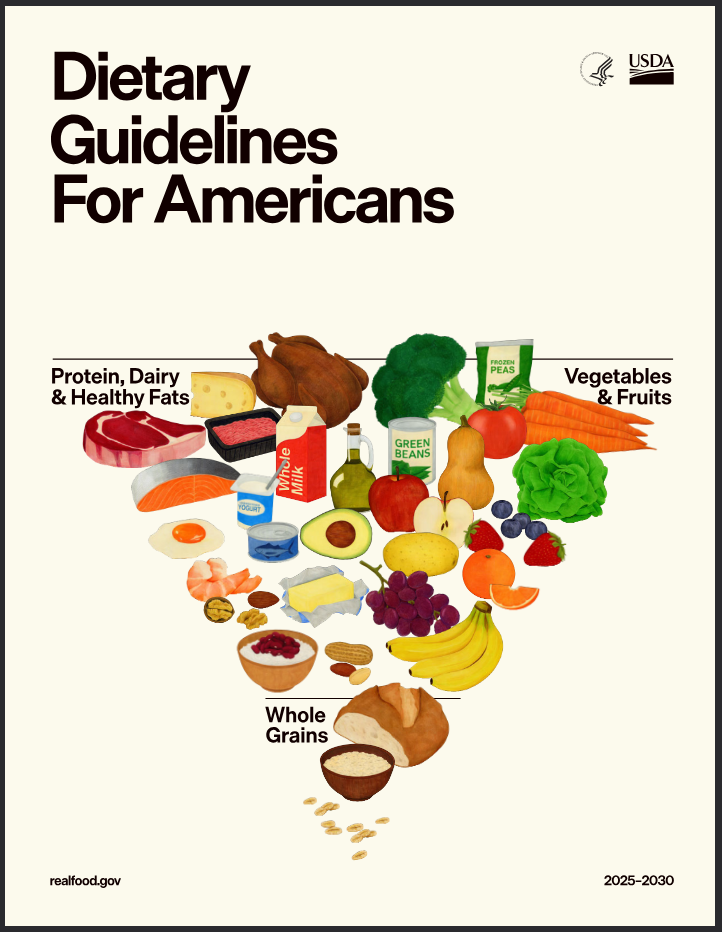
This last Wednesday, January 7, 2026, the U.S. Department of Health and Human Services (HHS) and U.S. Department of Agriculture released the Dietary Guidelines for Americans that will be used through the end of 2030. These guidelines are to not only to be used by citizens to plan their meals but are used by policymakers and federal nutrition programs (like school meals, military rations, WIC, SNAP). So, they have significant impact. https://cdn.realfood.gov/DGA.pdf
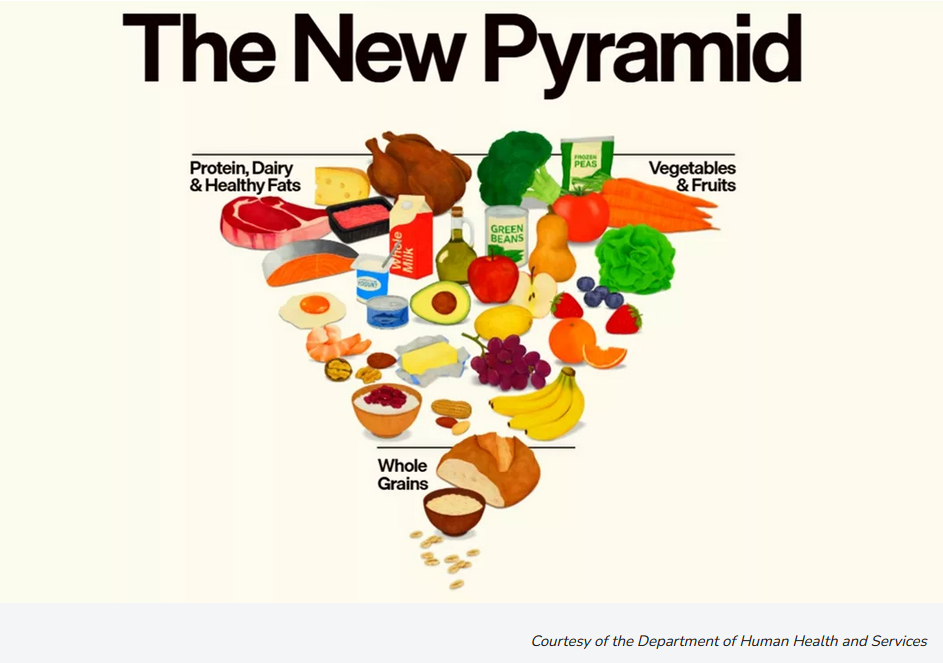
According to the press release on the HHS website, the Guidelines emphasize simple, flexible guidance rooted in modern nutrition science:
- Prioritize protein at every meal
- Consume full-fat dairy with no added sugars
- Eat vegetables and fruits throughout the day, focusing on whole forms
- Incorporate healthy fats from whole foods such as meats, seafood, eggs, nuts, seeds, olives, and avocados
- Focus on whole grains, while sharply reducing refined carbohydrates
- Limit highly processed foods, added sugars, and artificial additives
- Eat the right amount for you, based on age, sex, size, and activity level
- Choose water and unsweetened beverages to support hydration
- Limit alcohol consumption for better overall health
Going back to 2018, I’ve written articles about the Dietary Guidelines several times before.
Even back then, almost 8 years ago now, my message was simple:
“…you should not blindly trust what the government tells you when it comes to what to eat. There is a lot at play behind the scenes when any new guidelines or regulation is issued.
My recommendation is simple and is always the same: eat real food. By eating real food, as close to its natural state as possible, you're likely to be much healthier simply because you'll avoid a lot of processed foods. Unaltered foods contain all the nutrients your body needs, and in far more ideal ratios than even the best scientists and estimate.”
Back in June of 2025, I wrote that I hoped the new HHS and Dept of Health leadership would make sweeping changes.
While not everything I hoped for changed, the new guidelines have more drastic changes than we have ever seen.
WHOLE FOODS
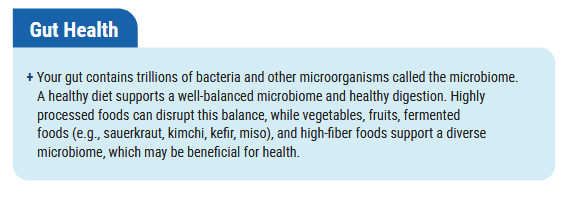
The new guidelines emphasis on whole foods is huge! The guidelines advise people to eat “whole foods” or “real food.” This is almost word for word what I have hoped for and I’m excited that this language is so prominent. Virtually all nutrition experts agree that eating foods in which the ingredients are limited, recognizable and not highly processed is a good thing. Heavily processed foods have very little to no benefits.
Another interesting thing the guidelines emphasize is the introduction of allergens, like food containing peanuts, wheat, eggs and shellfish, in children’s diets at around 6 months old. The research on this is clear that it lowers the risk of developing food allergies later on.
PROTEIN
The previous recommended dietary allowance for protein was 0.8 grams per kilogram of body weight per day. The new guidelines suggest 1.2 to 1.6 grams per kilogram (0.54 and 0.73 grams of protein per pound of body weight daily). While I still think this is low, it’s an improvement.
ADDED SUGAR
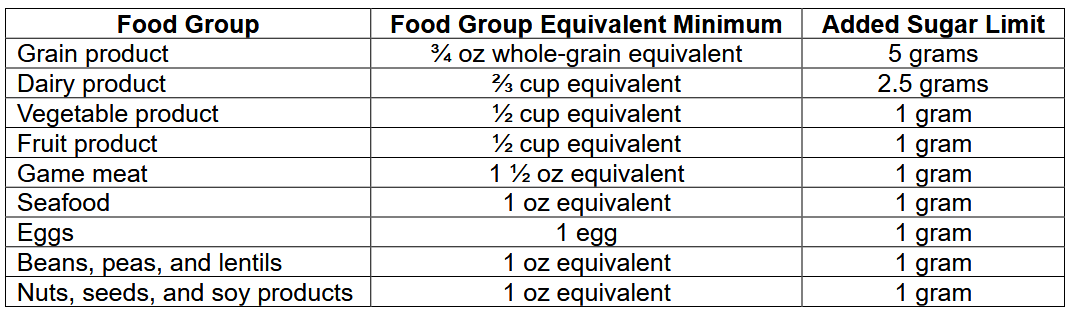
Previous guidelines suggested no added sugar in food for children under 2; the new guidelines extend this to age 10. Everyone that knows me knows how I feel about excess sugar in anyone’s diet, but it has bigger impacts on children. Kids that eat too much sugar will likely face a lifetime of health problems. This may be because early sugar exposure can affect children’s long-term taste preferences. American children currently consume a lot of added sugar.
SATURATED FATS
One of my main sticking points with the previous food pyramids and then MyPlate was that they all said to limit saturated fats. The recommendation to limit saturated fats remains intact in the newest guidelines, yet they also encourage people to eat foods higher in saturated fats, including full-fat dairy and red meat, and list butter and beef tallow as options for cooking with “healthy fats.”
The problem is that it would be nearly impossible for people to follow the guidelines’ suggestions on protein and dairy while staying under the 10% saturated fat limit it recommends.
The influence of health advocacy groups and medical societies can be seen still and is likely the reason for the contradicting recommendations on saturated fat.
Nina Teicholz, author of the 2014 book “The Big Fat Surprise” and head of the advocacy group Nutrition Coalition is someone that I have referenced many times on this site over the years. I trust her research and opinion on nutrition.
The positive messaging about butter, beef tallow, and red meat are “impossible to reconcile” with limitations on saturated fat, Teicholz said, suggesting that Kennedy and his advisers may have been reluctant to stick their necks out as the only country in the world without limits on saturated fat. They also may have been wary of challenging the nutritional establishment, she said.
LOW-CARB
A low-carbohydrate is included in a section called “Special Populations & Consideration” as a possible option for people with chronic disease (obesity, diabetes, other metabolic diseases). But as I mentioned already, achieving this low-carbohydrate diet, which will be higher in protein, will be nearly impossible with the continued 10% cap on saturated fats.
FOOD GROUP TIES
I’ve written in the past about the influence of lobbyists and those tied to the food industry on these guidelines.
Unfortunately, these ties still remain. Three of the nine members of the HHS panel that wrote these guidelines have received grants or done consulting work for the National Cattlemen’s Beef Association. One of those also received a research grant from and serves as an adviser to the National Pork Board. At least three members, including two of the same ones who have done work for red meat groups, have financial ties to dairy industry organizations, such as the National Dairy Council.
Overall, while they are not perfect, I’m very pleased with the direction these new guidelines have taken. That’s the first time I’ve ever been able to write that!
Be sure and visit all of my sponsor’s websites. I sought out these companies because they provide great products and services.


Wishing you optimal health and peak performance,

No comments yet.