
Metabolism As We Age
There is without a doubt conventional wisdom about metabolism. It goes something like, “Most people gain weight each year no matter what because their metabolisms slow down, especially around middle age.”.
We’ve also been told that women have slower metabolisms than men. Menopause only makes things worse, slowing women’s metabolisms even more.
Turns out, none of this is true.

A study done a few year ago, published in Science, using data from 6,400 people across the world, ranging in age from 8 days to 95 years old, had some results that have changed how experts think about metabolism.
The shocking results of this study were made possible because they were able to use regression analysis to remove any excess body fat from each person. Not only did they find that there are no real differences between the metabolic rates of men and women after controlling for other factors, but the results also showed something that had never been identified - four distinct phases of human metabolism based on age.
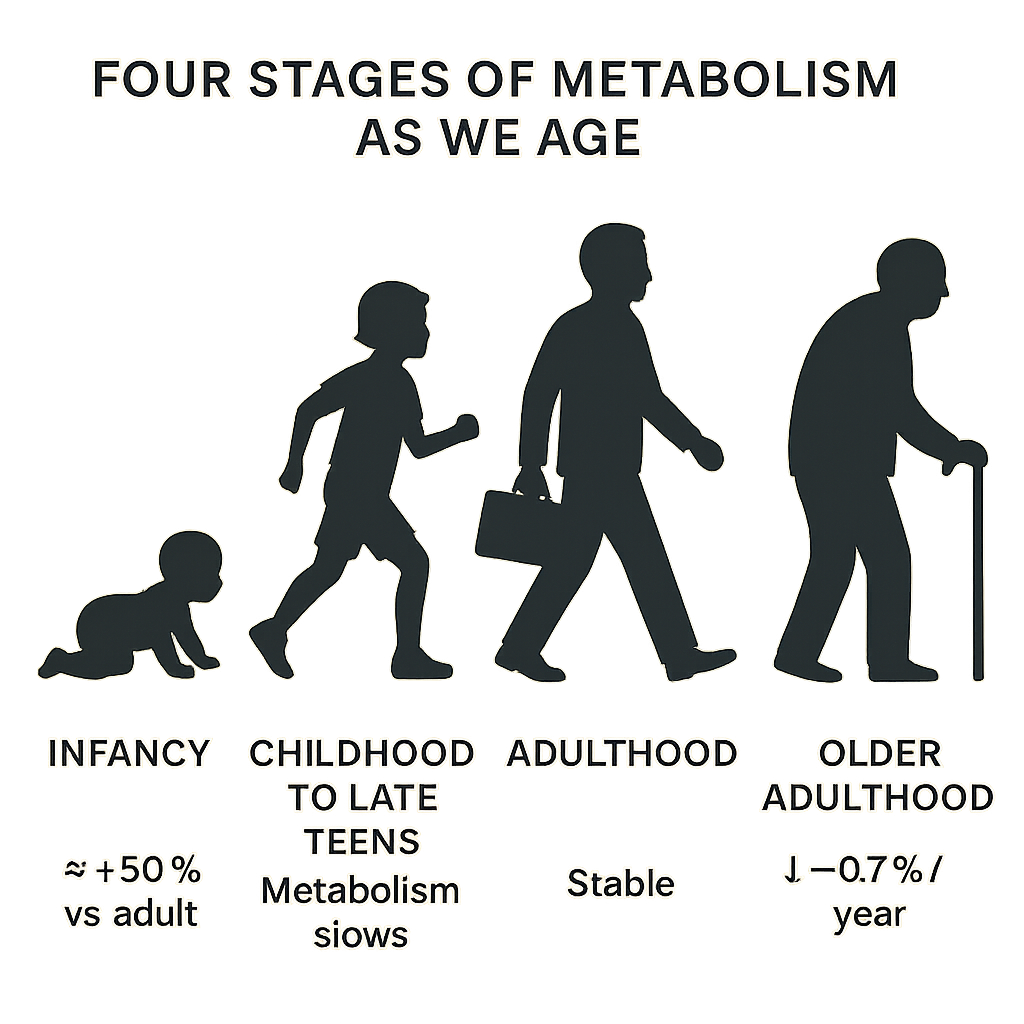
The four phases of metabolism:
Infancy (Up to 1 year): Metabolism is at its highest, burning calories at a rate about 50% higher than adults. Babies absorb everything. Everyone loves a fat baby, right?
Adolescence (1 to 20 years): The metabolic rate gradually slows by about 3% each year until it reaches adult levels around age 20. Despite the teen years being a time of growth spurts, the researchers didn’t see any uptick in daily calorie needs in adolescence after they took body size into account.
Adulthood (20 to 60 years): The metabolic rate remains stable, even through major hormonal changes like pregnancy and menopause. We are hardwired for our metabolism to be stable through the majority of our adult life. While several factors could explain the thickening waistlines that often emerge during our prime working years, the findings suggest that a changing metabolism isn’t one of them.
Older Adulthood (After 60 years): The metabolic rate begins to decline, slowing by about 0.7% to 1% per year. This decline is likely linked to a general slowdown in organ function. Energy requirements of just the heart, liver, kidney and brain account for about 65% of your resting metabolic rate. The slowing of your metabolism at age 60 is likely then linked to your organs not functioning as well as they should. The authors go so far as to note that despite how ‘young’ a person looks in their 60’s, biologically their organs are likely not functioning nearly as well as they had previously. Getting old is just never going to be easy on your body!

(TEE) - Total Energy Expenditure (aka Metabolic Rate)
There are more than 80 co-authors on the study. They combined data from six different labs collected over 40 years. All of the research centers involved in the project were studying metabolic rates with a method considered the gold standard — doubly labeled water. It’s a urine test that involves having a person drink water in which the hydrogen and oxygen in the water molecules have been replaced with naturally occurring “heavy” forms and then measuring how quickly they’re flushed out. The investigators also had participants’ heights and weights and percentage body fat, which allowed them to ultimately factor in someone’s excess fat and muscle mass when it came to calculating their actual metabolism.
This suggests that weight gain isn’t a result of slowing metabolism.
Many people still see their weight increase as they get older, despite their metabolism staying relatively the same throughout their life. This suggests that weight gain isn’t a result of slowing metabolism. Rather, it’s more likely to be due to eating more food than our body uses. What else contributes to weight gain?
Primary factors to weight gain as we age are:
Muscle loss (Sarcopenia): Starting around age 30, adults lose about 3–8% of muscle mass per decade. Muscle burns more calories at rest than fat, so less muscle mass means fewer calories are burned throughout the day.
Reduced physical activity: People tend to become less active as they get older, which lowers overall daily energy expenditure. They usually do not adjust food intake accordingly.
Poor sleep: Your body continues to perform essential functions overnight, requiring energy (45-55 calories per hour) to do so. This includes repairing cells, processing nutrients, and maintaining a core body temperature.
Fat storage: Excess body fat crushes our metabolism. The body's ability to burn fat for energy is reduced, while its capacity to store fat increases, creating a cycle that favors further weight gain
Medications: Some medications can promote weight gain.
Remember that all of these findings were after controlling for the amount of fat free mass people have - pretending people were all lean - and then comparing.
The study shows that less fat that you have, regardless of age, the more energy you expend.
Simple, but not easy!
Be sure and visit all of my sponsor’s websites. I sought out these companies because they provide great products and services.


Wishing you optimal health and peak performance,

No comments yet.